Starter
One company, trading or distribution
from
RM 14,000
- Up to 10 users
- Accounting with SST codes, sales, purchasing, stock
- MyInvois app installed and tested (if you're in scope)
- Data moved at a month-end
- 2 training sessions
SST-ready books, stock, purchasing and production in one place, on open-source ERPNext, with invoices sent to LHDN's MyInvois. Check the threshold first; you may not need e-invoicing yet.
Source: LHDN e-Invoice Guideline version 4.8 (30 August 2026), sections 1.6.1(e) and 1.6.10, which exempt taxpayers with annual turnover or revenue below RM3 million, up from RM1 million. Your tax agent has the final word on your case.
Seri Kembang Cartonworks, Seri Kembang, Selangor
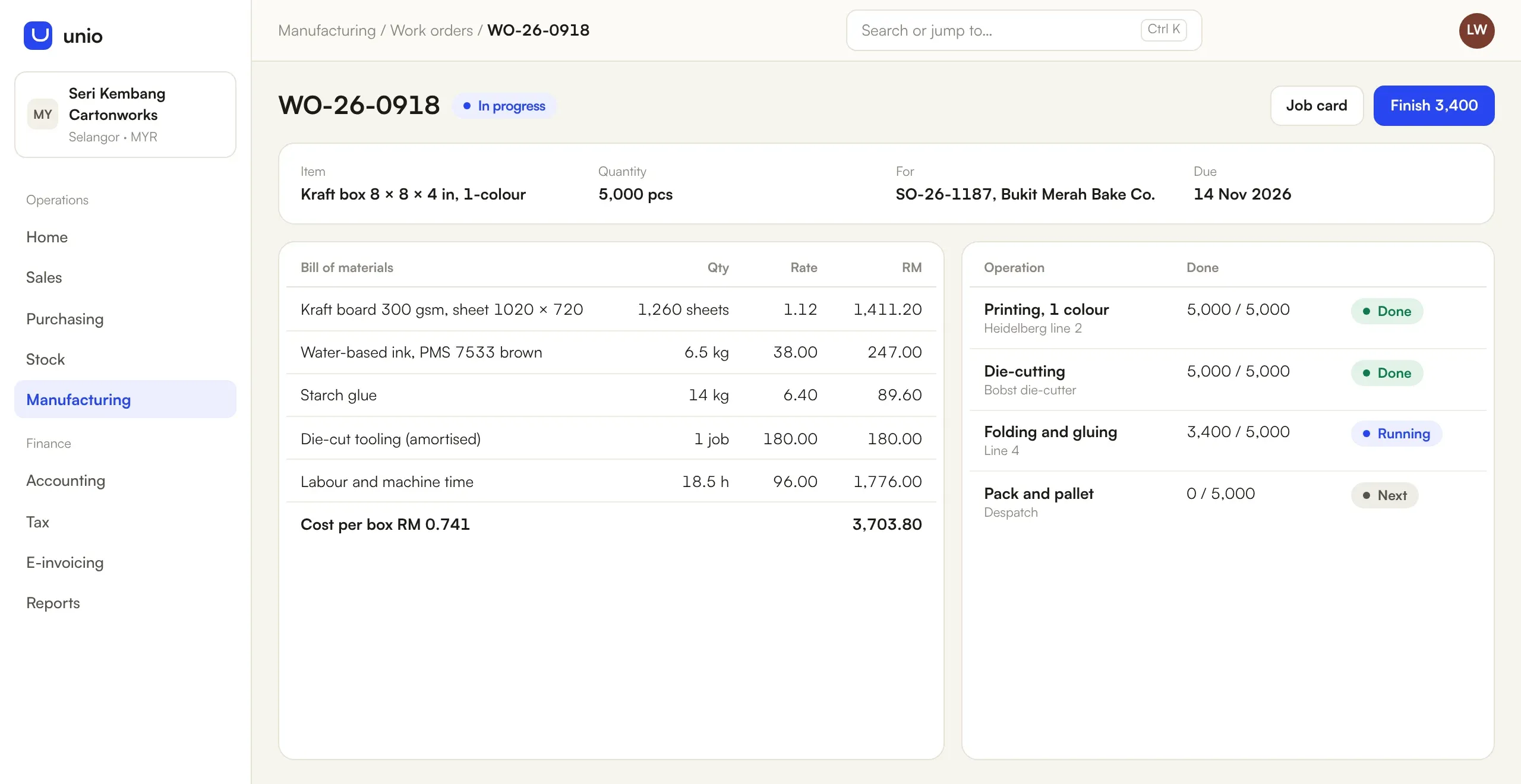
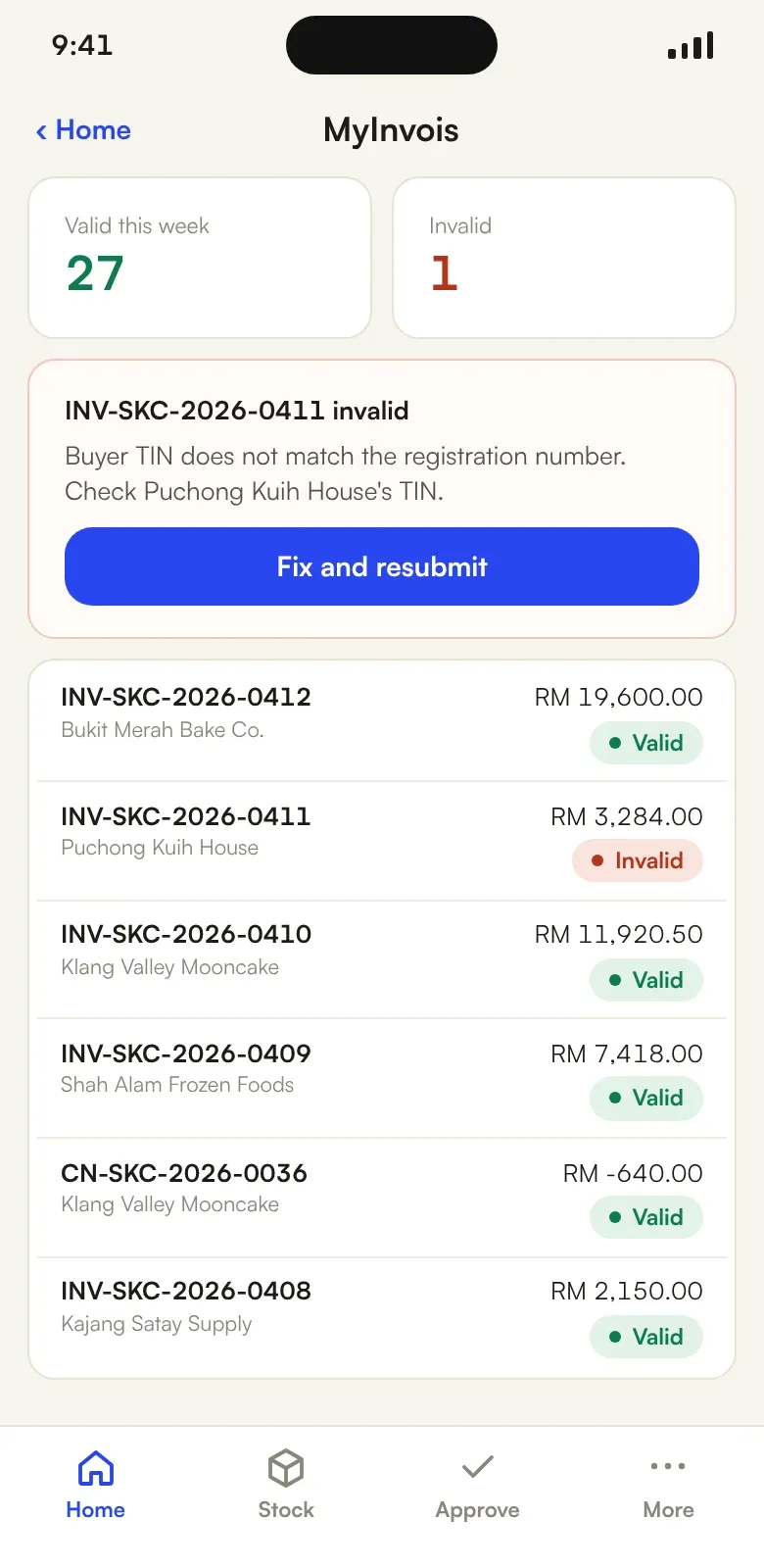
A maker of printed boxes and labels for food brands that tracked jobs and stock in spreadsheets. We moved them to Unio ERP with a bill of materials per box size, work orders and the MyInvois app, live a month before Phase 4.
First audit since we switched, the auditor asked for the LHDN validation numbers. They're printed on every invoice, so that took about a minute.On 1 July 2025 the Ministry of Finance widened service tax to more services and revised sales tax on non-essential goods. In an ERP that comes down to a tax code on each item and the right registration date on the company.
Each product and service carries its own sales or service tax code, so a newly taxable service is charged from the day you registered and older invoices stay as they were.
Item tax templatesRental and leasing, construction, beauty, private healthcare, education and financial services came into scope on 1 July 2025. Some apply only above a threshold or to some customers; your tax agent confirms which apply to you, and we add the codes and the date.
Since 1 Jul 2025Sales tax at 5% or 10% on many non-essential goods. Your tax agent confirms the rate per product; we set it on the item, once.
5% or 10%Books in MYR and any foreign currency, sales and service tax codes, and the reports your tax agent asks for.
SST codesA MyInvois app for ERPNext (a paid app from a third-party publisher) sends each invoice to LHDN and stores the validation UUID and QR code. We connect your taxpayer credentials and test before go-live.
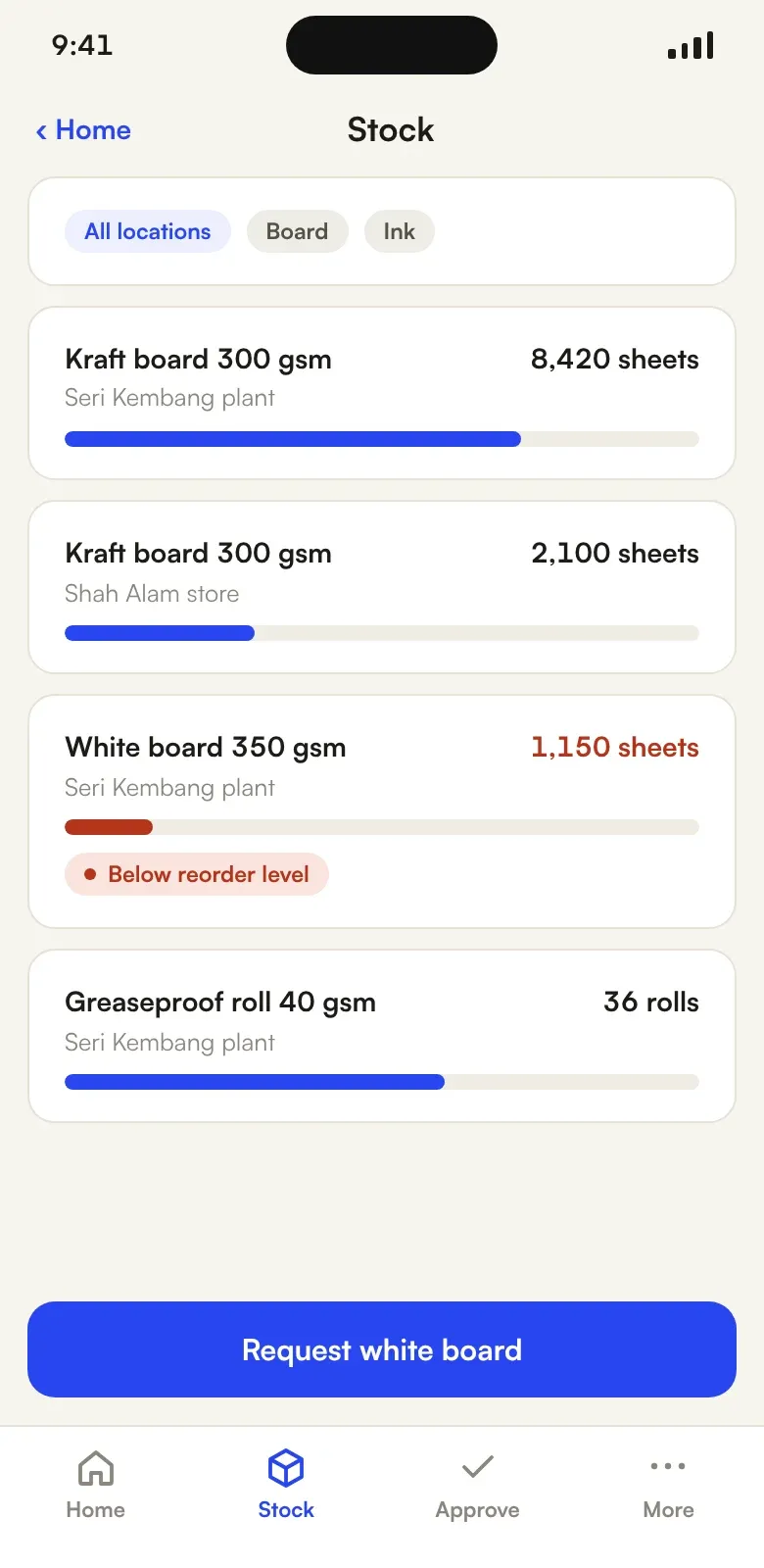
Validated invoicesPlant, store and consignment stock, with transfers and reorder levels.
Multi-locationBills of materials, work orders and job costing for manufacturers, down to the cost per piece.
BOM + work ordersPurchase requests, orders and supplier invoices, matched to what was received.
3-way match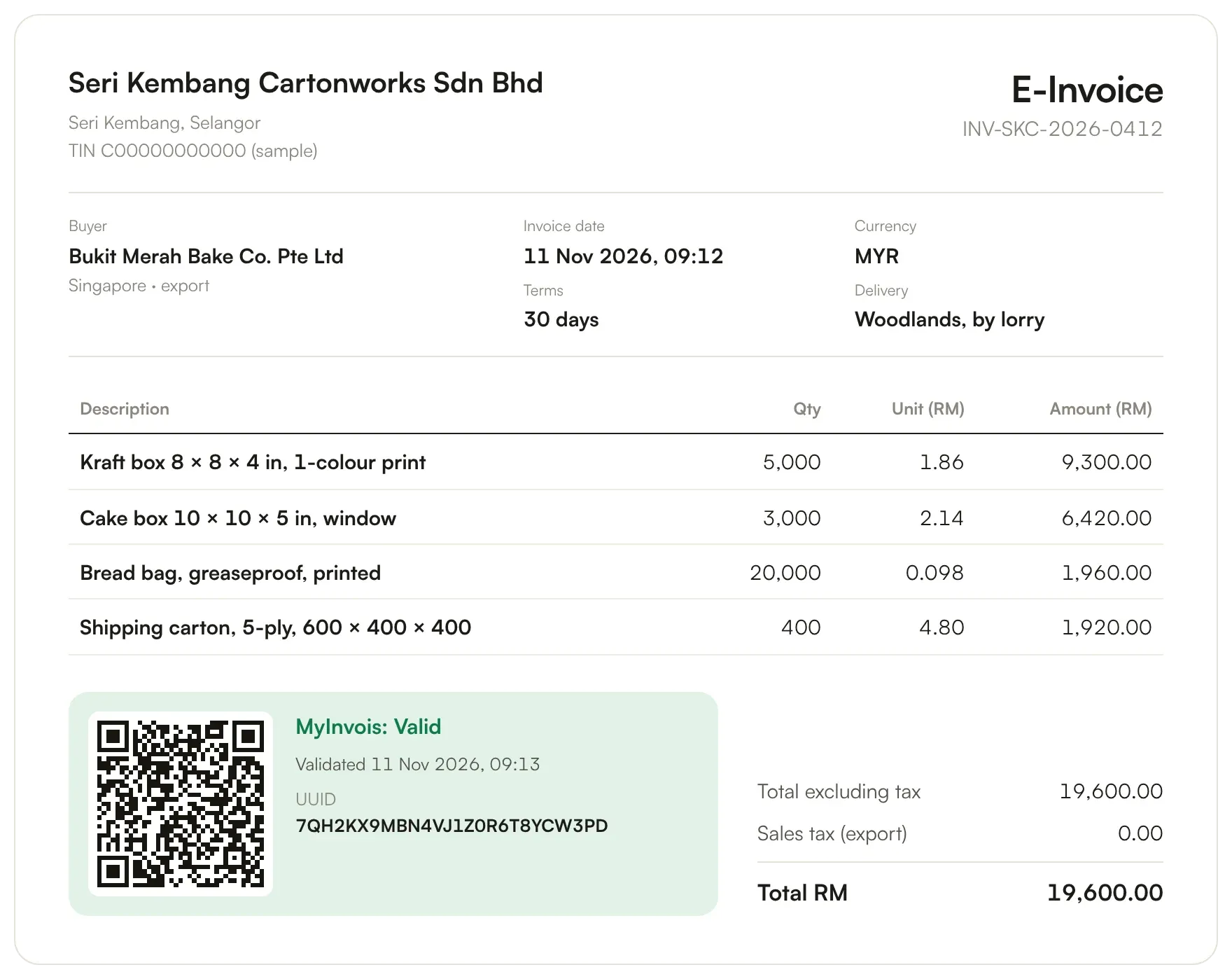
Your quote is fixed in writing after the call. No per-user licence.
One company, trading or distribution
Manufacturers, or up to 3 companies
Hosting, updates and help from us.
Unio ERP is how we set up open-source ERPNext (GPLv3) for your company: no per-user licence, your own database, hosting and support from us. We are not affiliated with Frappe, the makers of ERPNext.ERP services
If your annual turnover is RM3 million or more, yes. LHDN's e-Invoice Guideline version 4.8 (30 August 2026) exempts taxpayers below RM3 million, unless a corporate shareholder, holding company, related company or joint venture turns over RM3 million or more. Exempt businesses can still join voluntarily.
Yes, through a MyInvois app that sends each invoice to LHDN and stores the validation result. It is a paid app from a third-party publisher. We install it, connect your taxpayer credentials and test before go-live.
Often you shouldn't. Change when stock, production or purchasing live in spreadsheets beside the accounting tool and month-end takes days to reconcile.
For 10 to 120 staff with stock and production, an open-source ERP such as ERPNext: it covers both and has no per-user fees. For invoicing only, AutoCount or SQL Account is enough and cheaper.
One company with up to 10 users costs from RM 14,000 to set up. The monthly fee starts at RM 690 and covers hosting and support; the MyInvois app has its own licence fee.
Yes. At a month-end we take your masters and open balances out of the old system, load them, and check that the trial balance agrees before go-live.
Yes. Each item and service carries its own tax code, so newly taxable services are charged from the date you registered.
4 to 8 weeks for one company.
Sources: LHDN, e-Invoice Guideline v4.8 (30 Aug 2026), sections 1.6.1(e) and 1.6.10; LHDN, e-Invoice FAQs (updated 4 Sep 2026), Q98–Q104; Grant Thornton Malaysia, tax alert on the updated guideline; The Star, LHDN on the RM3 million threshold (30 Aug 2026); Malay Mail (31 Aug 2026); Ministry of Finance, SST changes from 1 July 2025; Frappe, ERPNext in Malaysia.
Book a call →Bring your last two years of sales. You'll know whether MyInvois applies, whether you need an ERP, and the price in ringgit.