Essentials
A solo practice or a new firm
from
$1,400
- Up to 5 pages
- Contact form that asks for names first
- Responsible-lawyer footer and disclaimer
- On-page and technical SEO
A website for lawyers has to bring in matters you can take, in words your bar allows. Ours ask for the other party's name first, say how each practice area is billed, and word every claim to the US, UK or Indian rules you answer to. You approve each claim before launch, and the build has one fixed price with no marketing retainer.

Marrick & Oduya Family Law, Denver: their intake page
For lawyer advertising, the differences land on the page itself: in the footer, on a fees page, or in what a bio may say about you.
General summary, not legal advice. This page sums up public rules in general terms; your bar or regulator decides what applies to you.
| Where | What the rule says | What it changes on your website | Source |
|---|---|---|---|
| United StatesABA Model Rules 7.1 to 7.3, as each state adopts them | What the rule saysNo false or misleading statement about you or your services (7.1). No claim to be a certified specialist unless a state-approved or ABA-accredited body certified you and that body is named (7.2(c)). Every communication names at least one lawyer or firm responsible for its content (7.2(d)). Live person-to-person solicitation is limited (7.3). | What it changes on your websiteA responsible lawyer's name and contact details in the footer. No "specialist" unless the certifying body is named beside it. Results, comparisons and reviews worded so they can't mislead. Some states, Florida among them, review lawyer ads before they run, so check whether yours reviews websites too. | Source |
| England and WalesSRA Transparency Rules | What the rule saysFirms that offer certain services publish price and service information for them: residential conveyancing, uncontested probate, summary motoring offences, immigration (not asylum), employment tribunal claims for unfair or wrongful dismissal, debt recovery up to £100,000, and business premises licensing. It has to be clear, accessible and in a prominent place. | What it changes on your websiteA price page for each listed service you offer. A complaints page that explains when clients can go to the Legal Ombudsman and the SRA. The SRA digital badge where visitors will see it, and the SRA number on letterhead and emails. | Source |
| IndiaBar Council of India Rules, Part VI, Rule 36 | What the rule saysAdvocates may not solicit work or advertise. A 2008 amendment allows a website that gives the advocate's name, contact details, enrolment details, qualifications and areas of practice. | What it changes on your websiteA profile limited to those items. No testimonials, no "best", no success claims, no paid promotion. | Source |
On Google, each lawyer can have a practitioner profile. A solo lawyer at a branded firm shares one listing, named "Firm: Lawyer". Google Business Profile guidelines
Bar trouble on a law firm site often starts with a single word in a heading. We keep a list of the words to replace, and every replacement goes to you for approval.
Under Rule 7.2(c), "specialist" needs certification from an approved body, named on the page. If you hold one, we name it instead.
A superlative nobody can verify is the kind of statement Rule 7.1 treats as misleading. A year and an admission can be checked.
No lawyer can promise an outcome. Where you list past results, a line like this sits beside them, in wording you approve.
A promise the office can't keep misleads as well. A response time you actually meet reads better anyway.
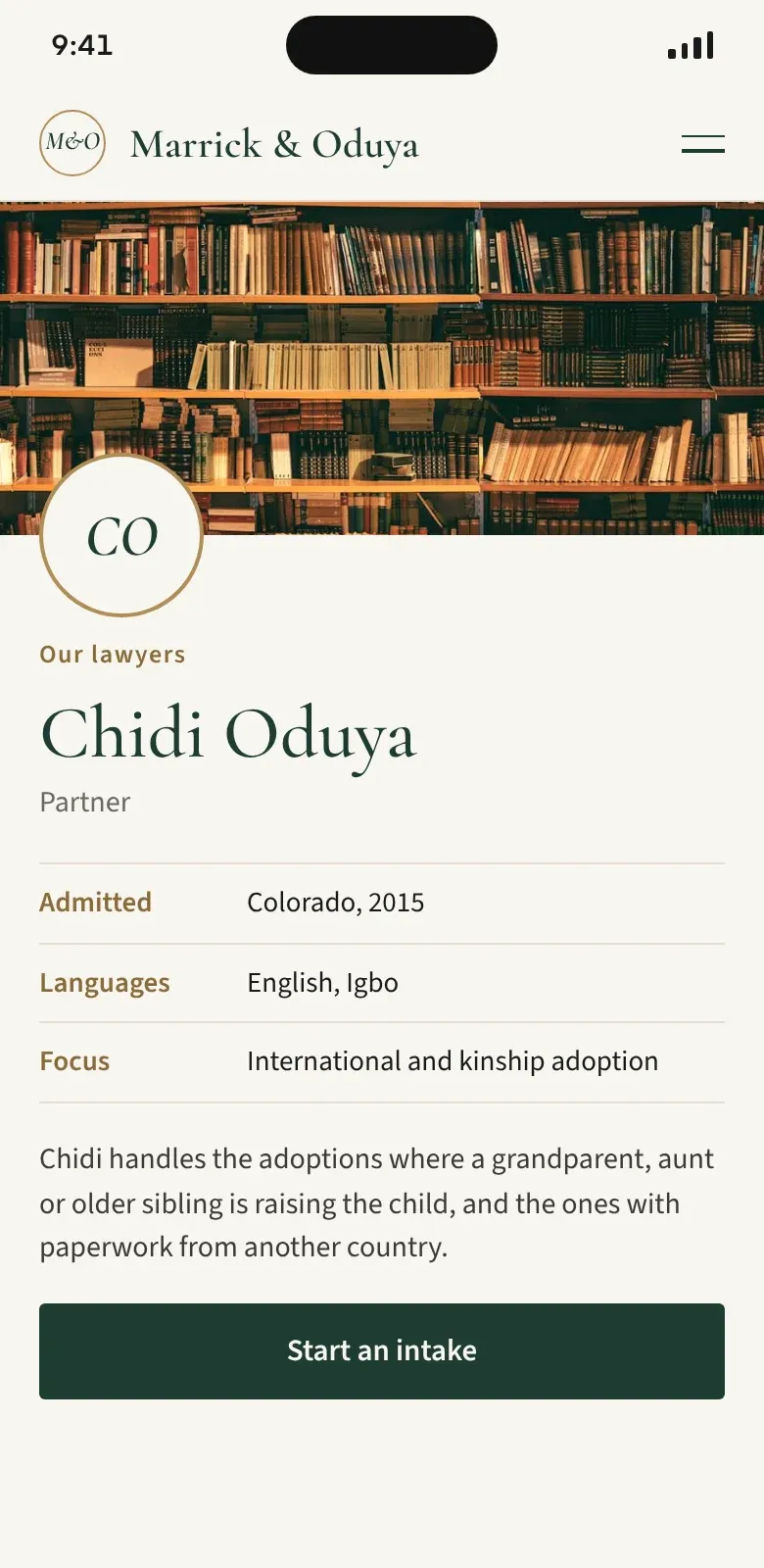
The spouse, the other parent, a grandparent raising the child: their names arrive at the top of the intake email, so your paralegal runs them against your client list before anyone reads the rest.
The form tells people not to send confidential details yet, and the confirmation email says no attorney-client relationship exists until you confirm one in writing. The wording is yours; we make sure it shows where it should.
If you use practice-management or intake software, the form feeds it, and that software stays billed by its provider.
Marrick & Oduya's stepparent adoption page, numbered where each part does its job. Good lawyer website design repeats this on every practice area.

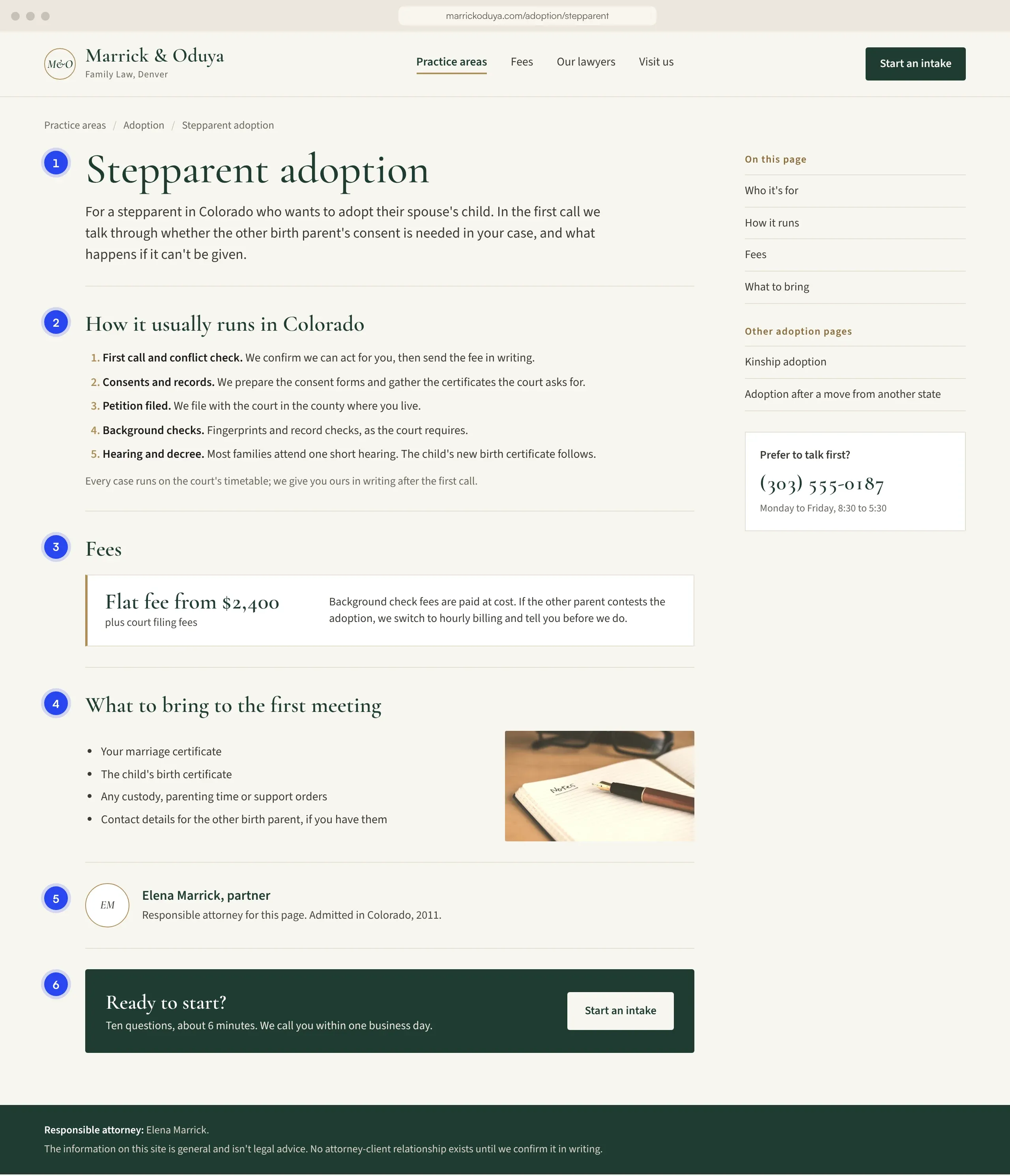
One sentence that tells a stepparent they're on the right page, and what the opening call will settle.
Five steps in plain words, phrased for the firm's own courts. The partners confirm each step before launch, because the page shouldn't guess.
A flat fee where the firm offers one, what it leaves out, and when billing turns hourly. It answers the question most callers open with.
A short list, so the meeting starts with the papers on the table.
Name, role and admission year. It also gives the page a person, which a family-law client looks for.
Says how long the intake takes and when the firm rings back, so nobody wonders what happens after Send.
Rules change, and so do firms. The loop keeps the published site matched to what you approved, with a record if anyone asks.
Steps 4 and 5 come with Care Plus. Without it, you get one dated copy of the site as it launched.
Copy from your notes and intake calls, with every statement about results, experience or fees marked for you.
Against your state's rules, the SRA's or the Bar Council's. Your ethics counsel can read the same draft.
Only the version you signed off, on the date you set.
Each published version is saved with its date, so you can show what the site said on any day.
Against your rules again, then you get a short list of anything that has drifted.
Any page edit starts the loop again at step 1
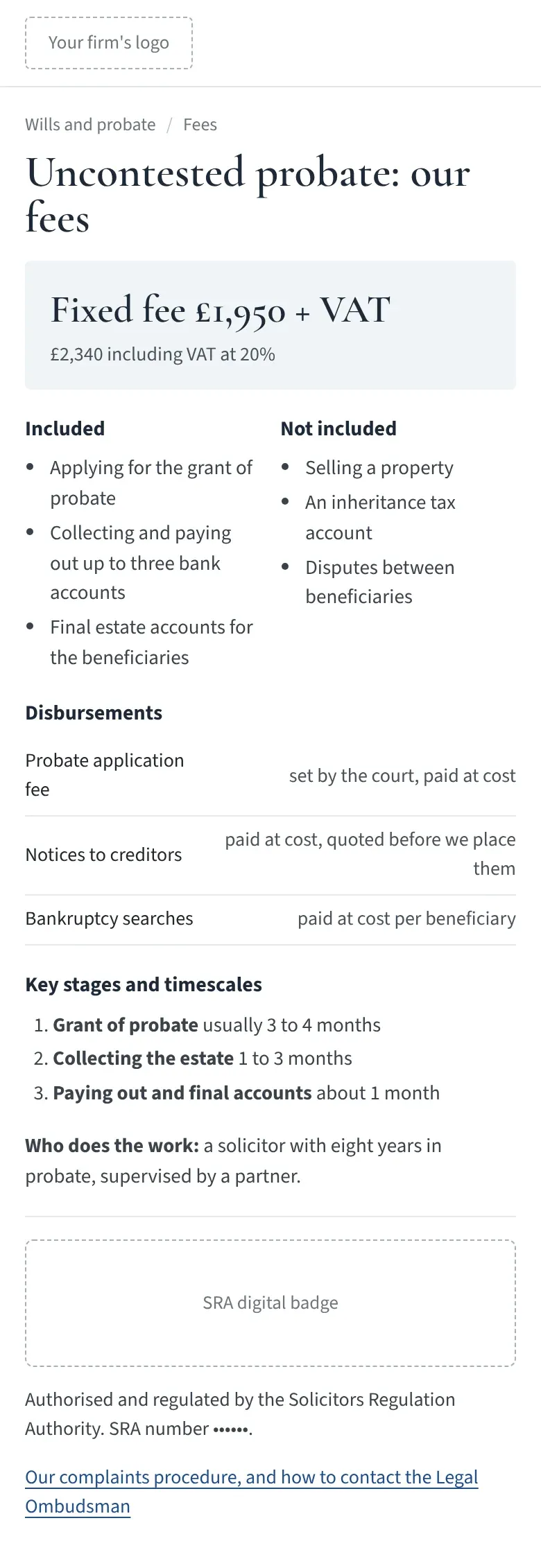
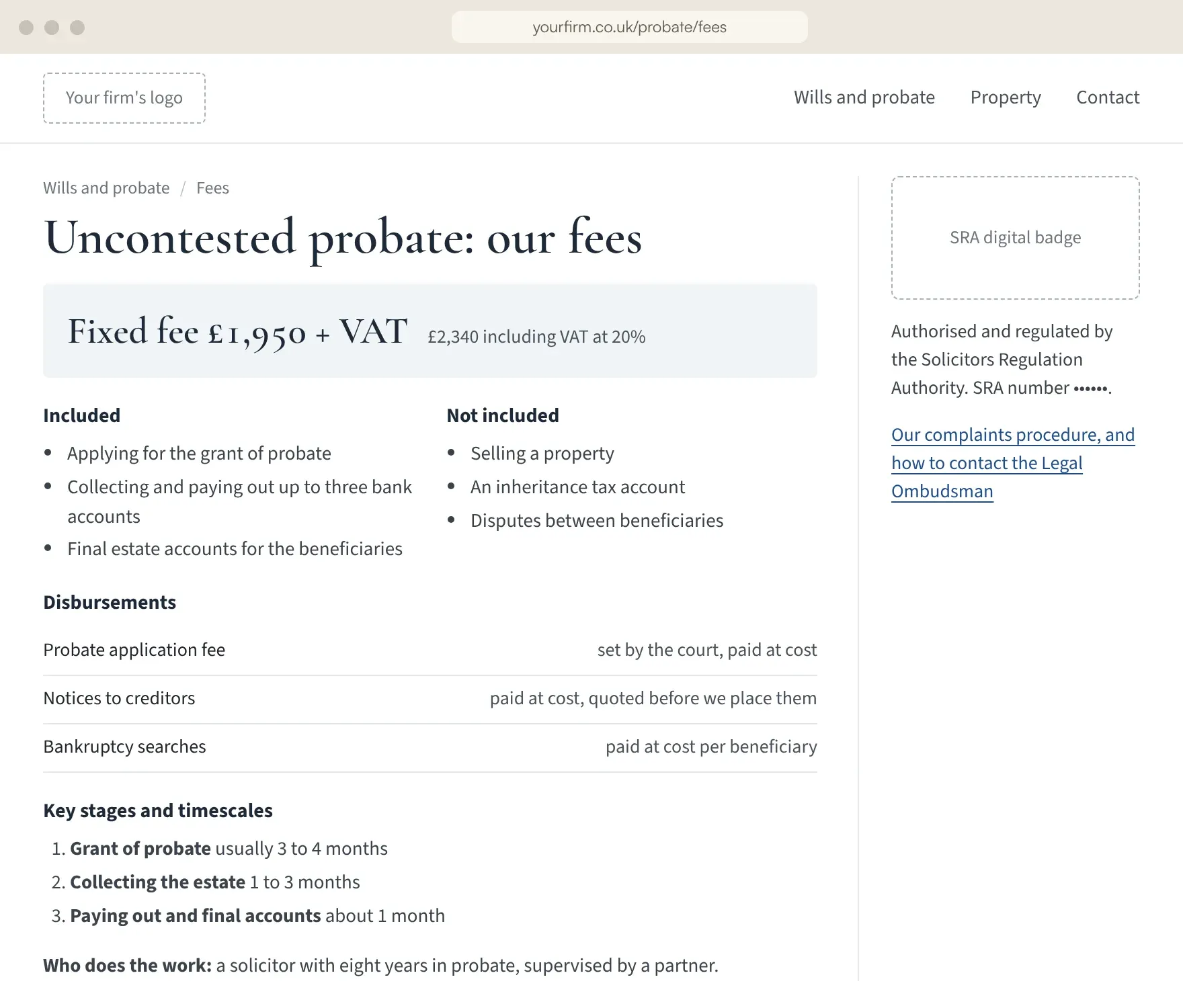
If you offer a service on the SRA's list, the price page isn't optional. We build it as a page a client can follow in a minute.
Example price page
Advocates in India can't advertise, but since 2008 they may publish a website with a short list of facts. We build to that list and stop there.
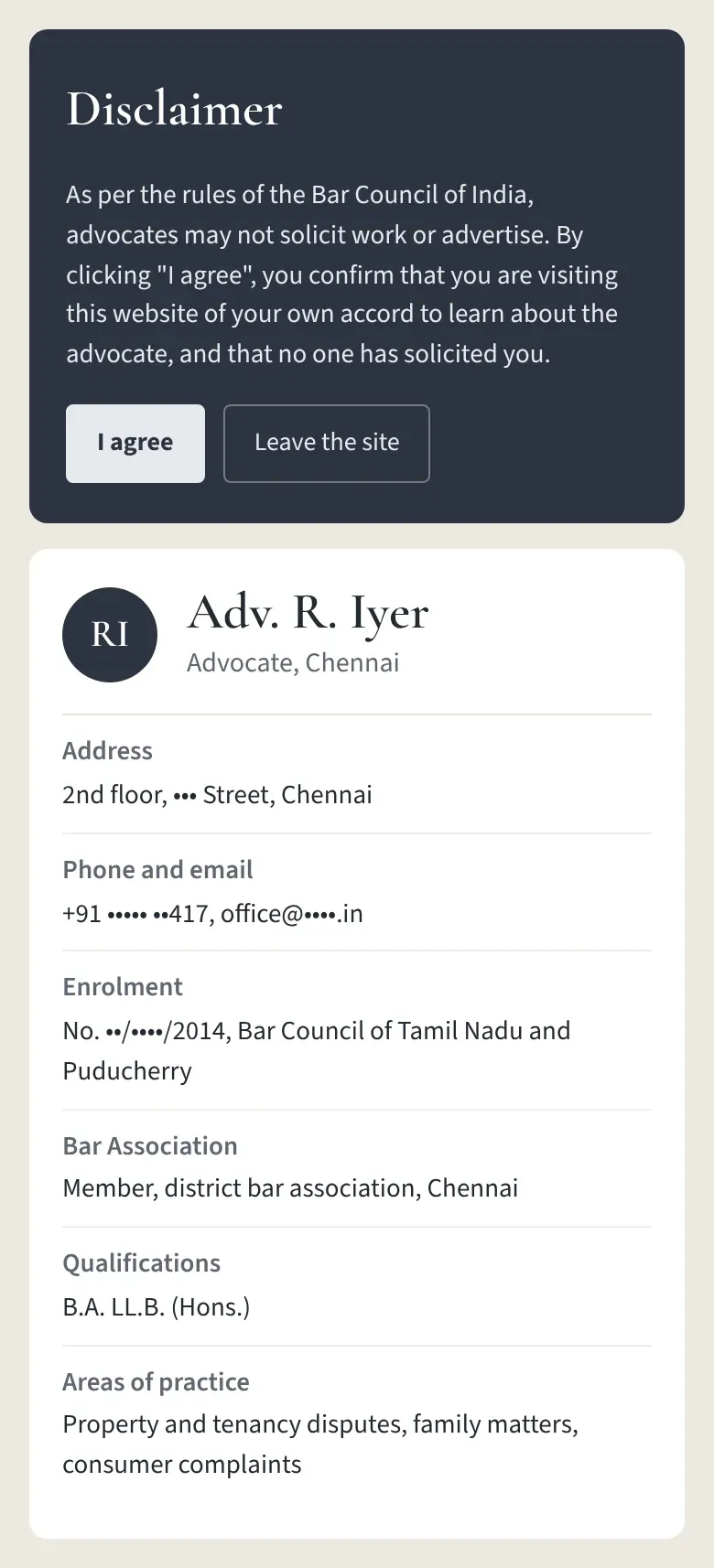
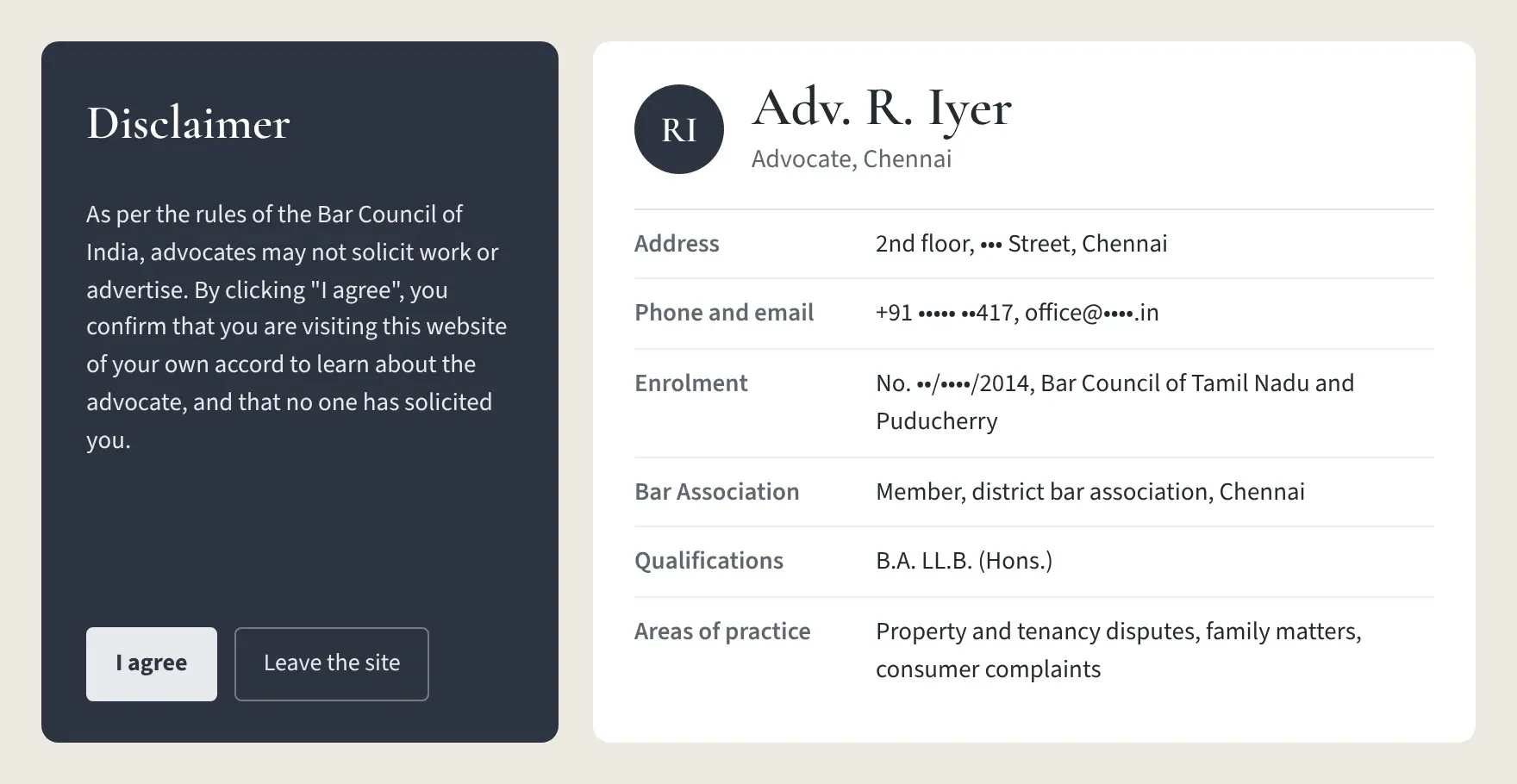
The "I agree" screen on most Indian law firm sites isn't text from Rule 36. Firms add it so visitors confirm they came looking on their own. We include one if you want it, and we don't pretend the rule demands it.
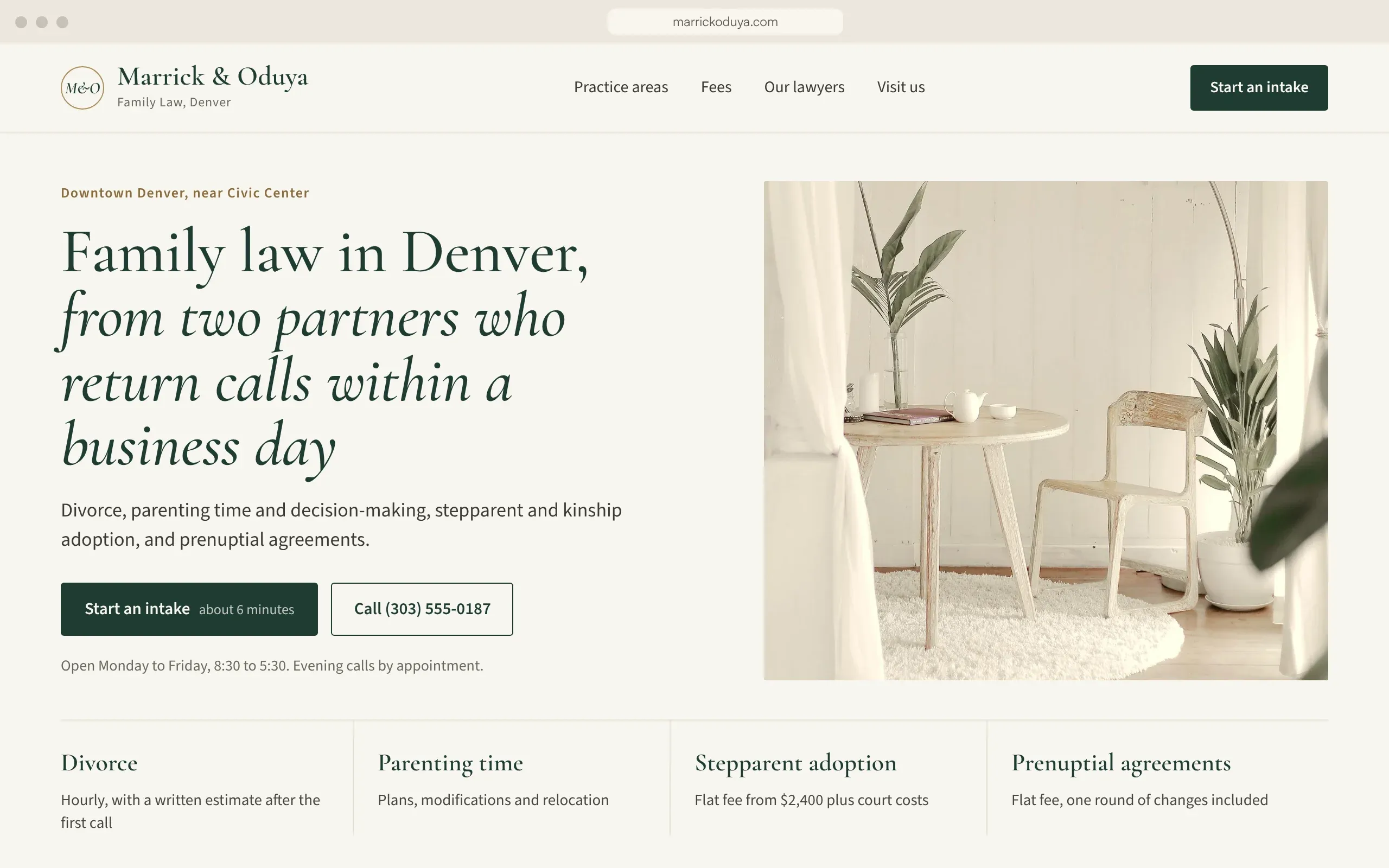
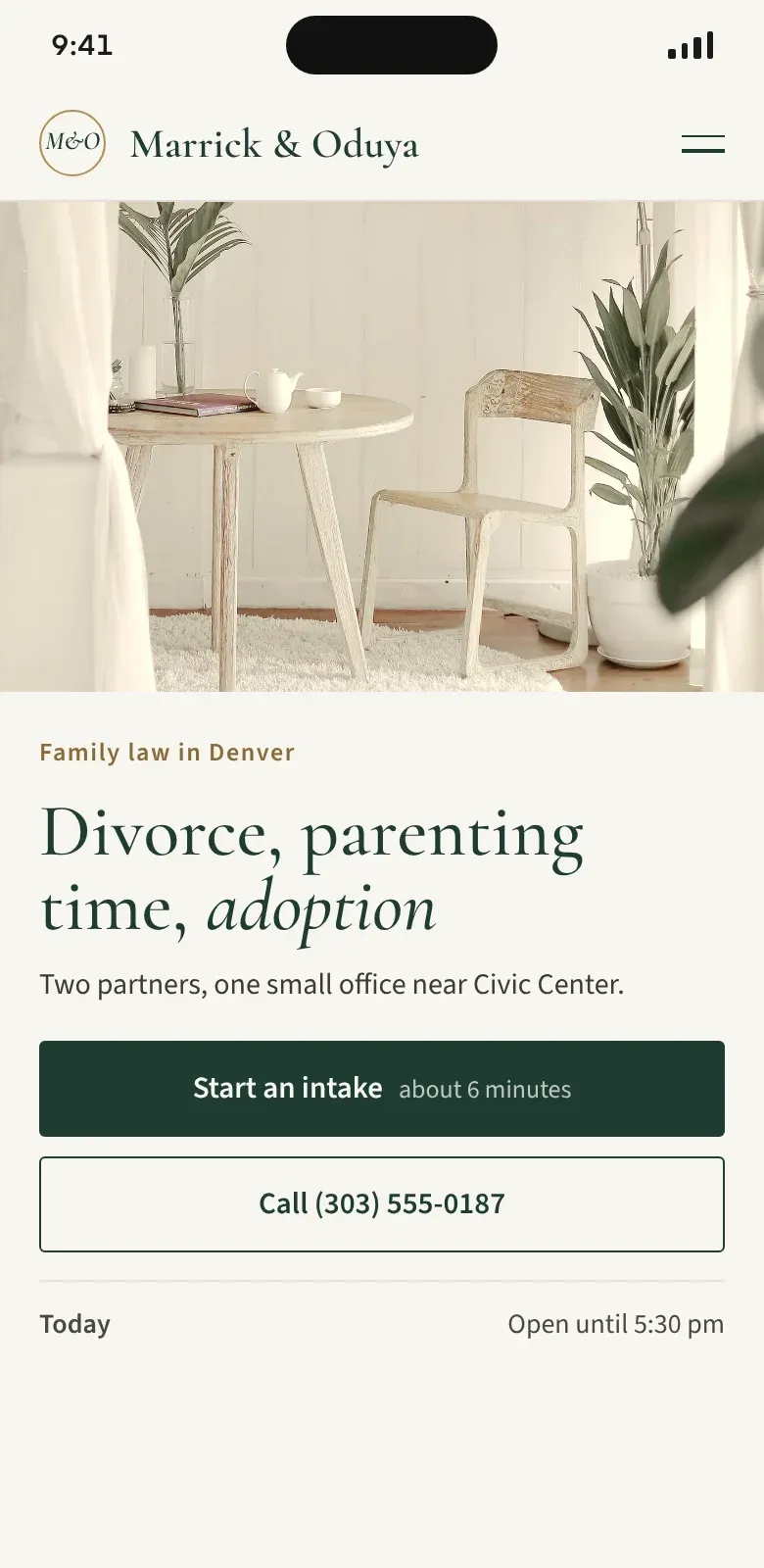
Marrick & Oduya Family Law, Denver, Colorado
Two partners in divorce, parenting time and adoption work. Their intake runs to ten questions with names first, each practice area has a page with its flat fee where they offer one, and Elena is named in the footer as responsible attorney.
From a letter to Wingflows
12 October 2026
One intake named a former client of ours, and we turned the matter down having read nothing but the names. Since the adoption page showed its fee, we spend the first call on the case instead of the price. Of the fourteen claims you sent us to approve, we rewrote two.The figure comes in writing after a call. No marketing retainer and no minimum term; the site, the domain and the content belong to your firm.
A solo practice or a new firm
A firm with several practice areas
Several offices, a client portal, or a move off another platform
Hosting, tested updates and backups.
From $1,400 for a small firm site, and from $2,800 with practice-area pages, the intake with its conflict step and your Google Business Profile. There's no monthly fee for the build itself. Hosting and upkeep are optional, through Care at $69 a month.
A page per practice area with the process and the fees, attorney bios with admissions, an intake form, hours and location, and whatever your rules require: in the US the responsible lawyer's name and contact; for SRA firms, prices for the listed services, the complaints procedure and the SRA badge.
Under ABA Model Rule 7.2(c), only if a state-approved or ABA-accredited organisation certified you, and the site names it. States adopt the rule in their own words, so check yours. Otherwise we write "practice limited to" or "focuses on".
Many US states allow genuine reviews that don't mislead, and some add conditions, so your state's rules decide. In India, Rule 36 rules testimonials out for advocates.
That depends on your rules and your engagement terms. Our forms ask for contact details, then the names of anyone else involved, tell people to hold back anything confidential, and state that no relationship exists until you confirm in writing, in your wording.
Price and service information for the listed services you offer, such as uncontested probate or residential conveyancing, your complaints procedure, and the badge the SRA issues, shown with your SRA number.
Yes, since the 2008 amendment to Rule 36: name, contact details, enrolment details, qualifications and the fields you practise in. Nothing that solicits work.
We write the structure, the process steps and the plain-language explanations from your notes. You review every legal statement before it goes live.
Sources: ABA Model Rules 7.1 to 7.3 (2018 amendments), via the Connecticut Bar; ABA Model Rule 7.2; The Florida Bar News, lawyer ad filing; SRA Transparency Rules; BCI Rule 36 (2008 amendment), Supreme Court of India AOR material; Google Business Profile guidelines.
Book a call →We'll mark the claims your rules would question, and tell you what a fixed-price rebuild costs.