Essentials
One project, or one agent, with a site of up to 5 pages
In India from ₹45,000 + GST
- Project or agent pages, mobile-first
- Registration line or brokerage footer set up
- Enquiry form sent to your inbox or CRM
- On-page and technical SEO
We design and build sites for two kinds of real estate clients: developers who sell projects, and agents who sell listings. A project site carries its registration number, unit sizes and monthly construction updates; an agent site reads listings from the MLS or your agency software. Either way, every enquiry lands in one list.


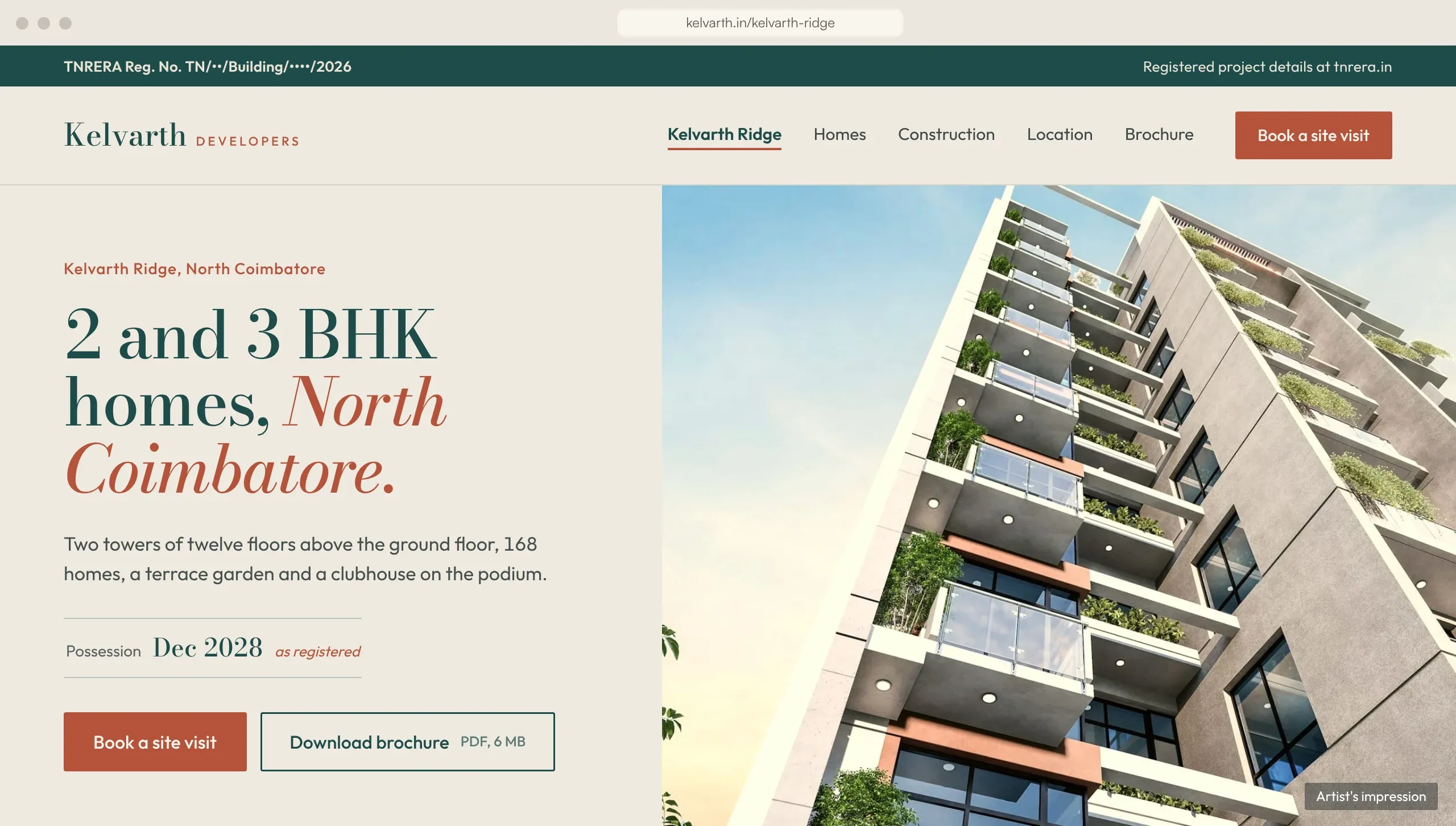
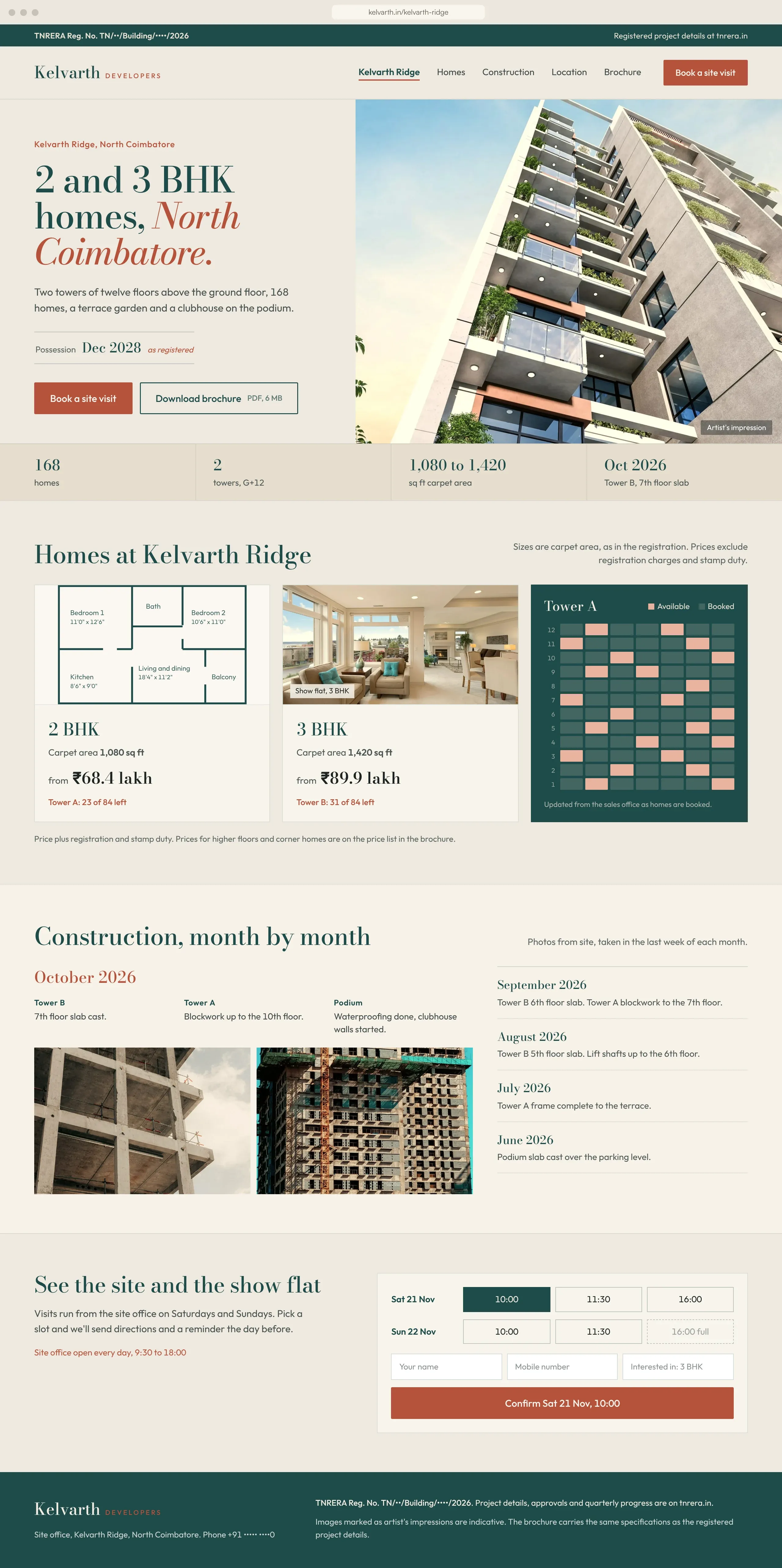
On a real estate developer website in India, the RERA Act bars advertising a project before it is registered, and it counts publicity in any medium as advertising. Once the number arrives, every ad has to carry it with the authority's website address. So we put it in the header of every project page and take the site public the week the number comes through, with unit sizes in carpet area and the possession date you registered.

The number and a link to the state authority on every page, so any page someone lands on from an ad shows it.
RERA Act s. 11(2)
The date from your registration, word for word. A launch-month promise on the site that differs from it is the first thing a buyer quotes back.
The PDF carries the same specifications, areas and amenities as the registered project details.
The floor grid reads from your sales office or ERP, so the site never offers a home that sold on Saturday.
Sizes in the measure the Act defines and your registration lists. A starting price per type, with registration and stamp duty named as extra.
RERA Act ss. 2(k), 4(2)(h)
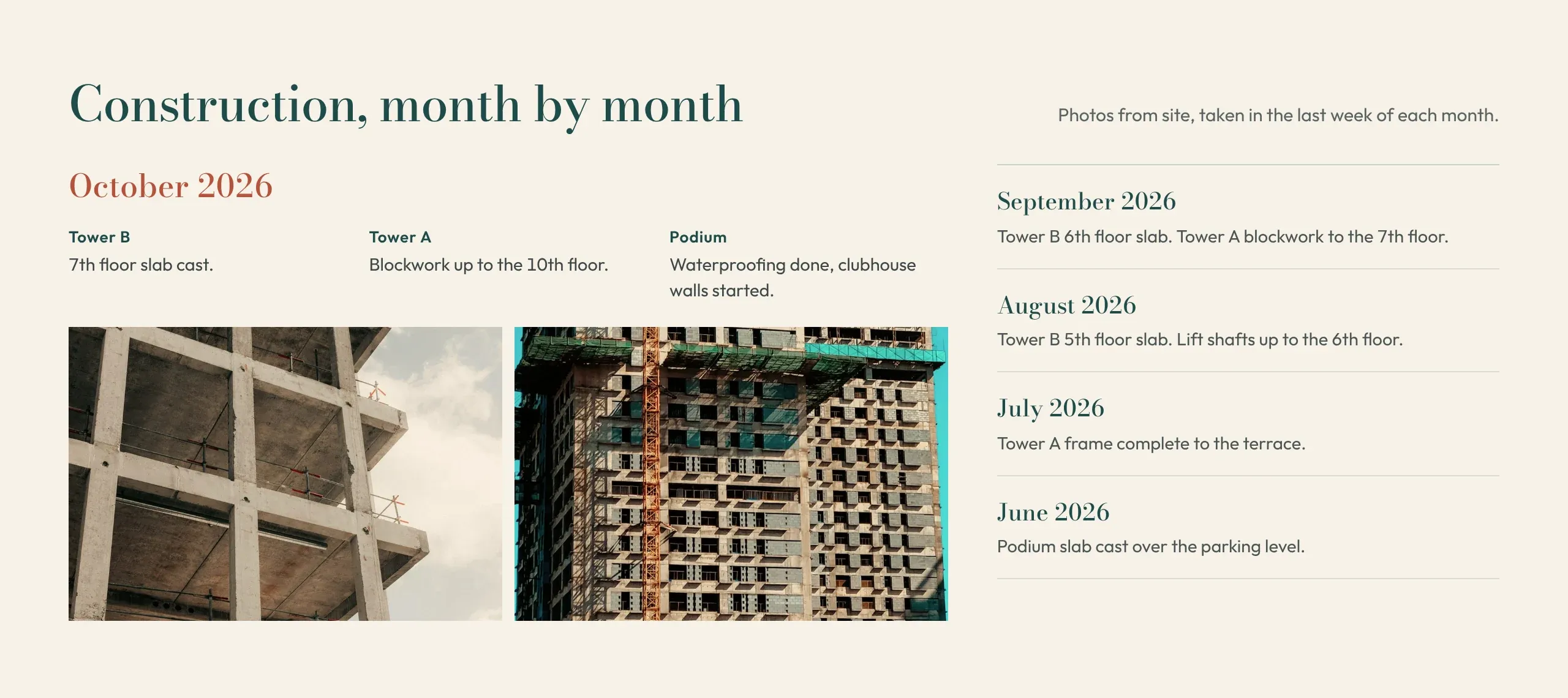
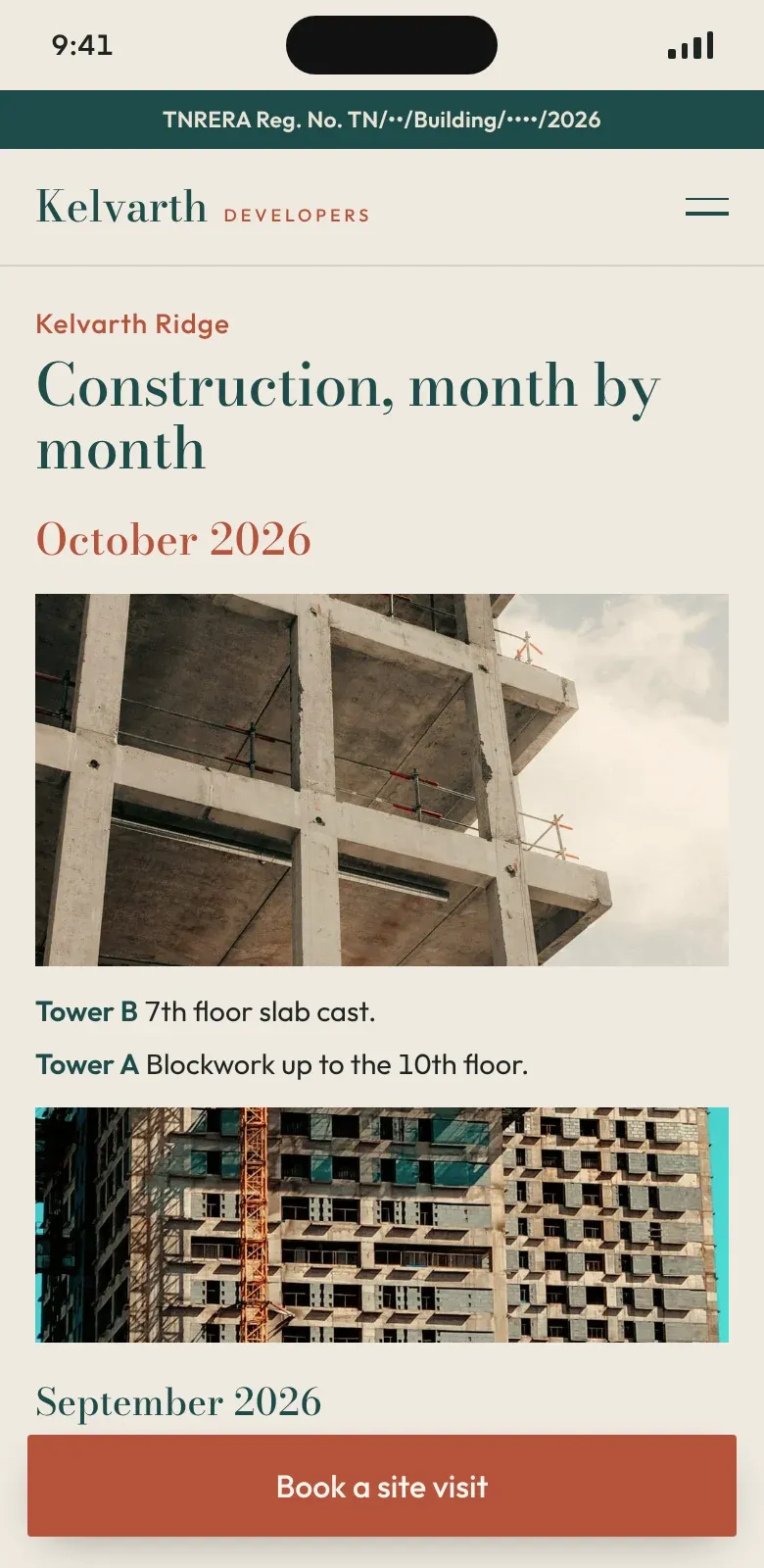
What was cast or built, two photos from site and the month. Buyers who booked early check it more than anyone.
Saturday and Sunday slots that fill up and close, with directions and a reminder sent the day before.
Some state authorities, such as Maharashtra's, also require ads to carry a QR code that links to the registered project. That code is issued by the authority, not made by us. General summary, not legal advice.
A real estate site rarely owns its listing data. US listings arrive through your MLS, UK listings through your agency software, and a developer's homes from its own sales records. The pipe decides what the site can show and how fast it changes.
Your MLS approves the feed and sets the display and refresh rules; we build to them. RETS, the older standard, is no longer supported by RESO.
Rightmove takes listings through its own datafeed formats, and most agency software already speaks them.
No portal sits in the middle: the inventory is yours, so the project page can be exact to the home.
Sources: NAR IDX policy; RESO Web API; Rightmove datafeed.
A Coimbatore project page needs a registration line, a Boise listing a brokerage credit and a Dubai listing a slot for its permit QR code. This is the short version we work from, with the source for each line.
| Market | On the website and in ads | Where the listing data comes from | Source |
|---|---|---|---|
| India, developers | No advertising or bookings before the project is registered. After that, the registration number and a pointer to the state authority's site on every ad. Some states, such as Maharashtra, also want a QR code on ads. | Your own inventory: homes, carpet areas, prices and bookings. | RERA Act ss. 3 and 11 (AP RERA guidelines) MahaRERA QR rule |
| United States, agents | Other brokerages' listings only through IDX, shown the way your MLS requires, usually with the listing brokerage named. Fair Housing rules cover every ad and listing description: no preference or limitation based on a protected characteristic. | Your MLS, through an IDX vendor or the MLS's own API. | NAR IDX policy 24 CFR 100.75 |
| United Kingdom, estate agents | Material information on every listing: price, council tax and tenure first; then property type, construction, utilities and parking; then issues such as flood risk or building safety where they apply. | Your agency software, which also feeds the portals. | RICS on NTSELAT material information |
| Dubai, brokers | A Madmoun QR code from the Trakheesi permit on print and broadcast ads since 24 April 2023. We leave a slot for it on listing pages when your permit covers online use. | Your CRM or listing software. | Dubai Media Office |
General summary, not legal advice. State authorities and emirates add rules of their own, so check the wording with your lawyer before launch.
A project site is not finished at launch. It sells for a weekend, reports for two or three years, then serves the people who bought.
Week 0
Nothing goes public before this. The number and the authority's web address go into the header template.
Same week
Project page, home types, brochure and an enquiry form that sends to your sales list.
Launch weekend
Saturday and Sunday slots with directions and a reminder. Full slots close on the page.
Monthly until possession
One post a month: what was cast or built, two photos, the month. The floor grid keeps updating as homes are booked.
Possession
The selling pages give way to handover steps, documents to collect and maintenance contacts.
The Act rules out a teaser site or a pre-launch form.
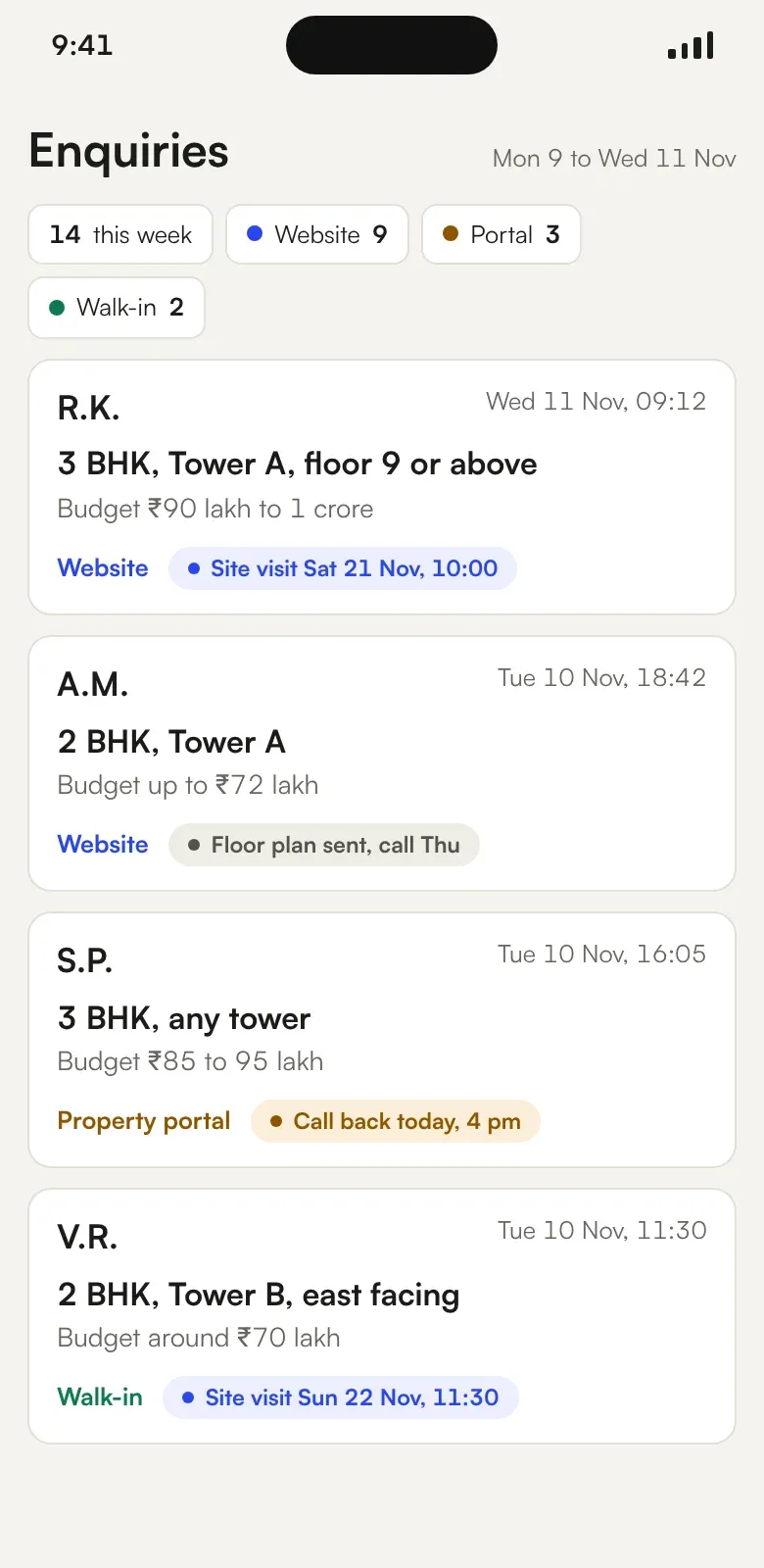
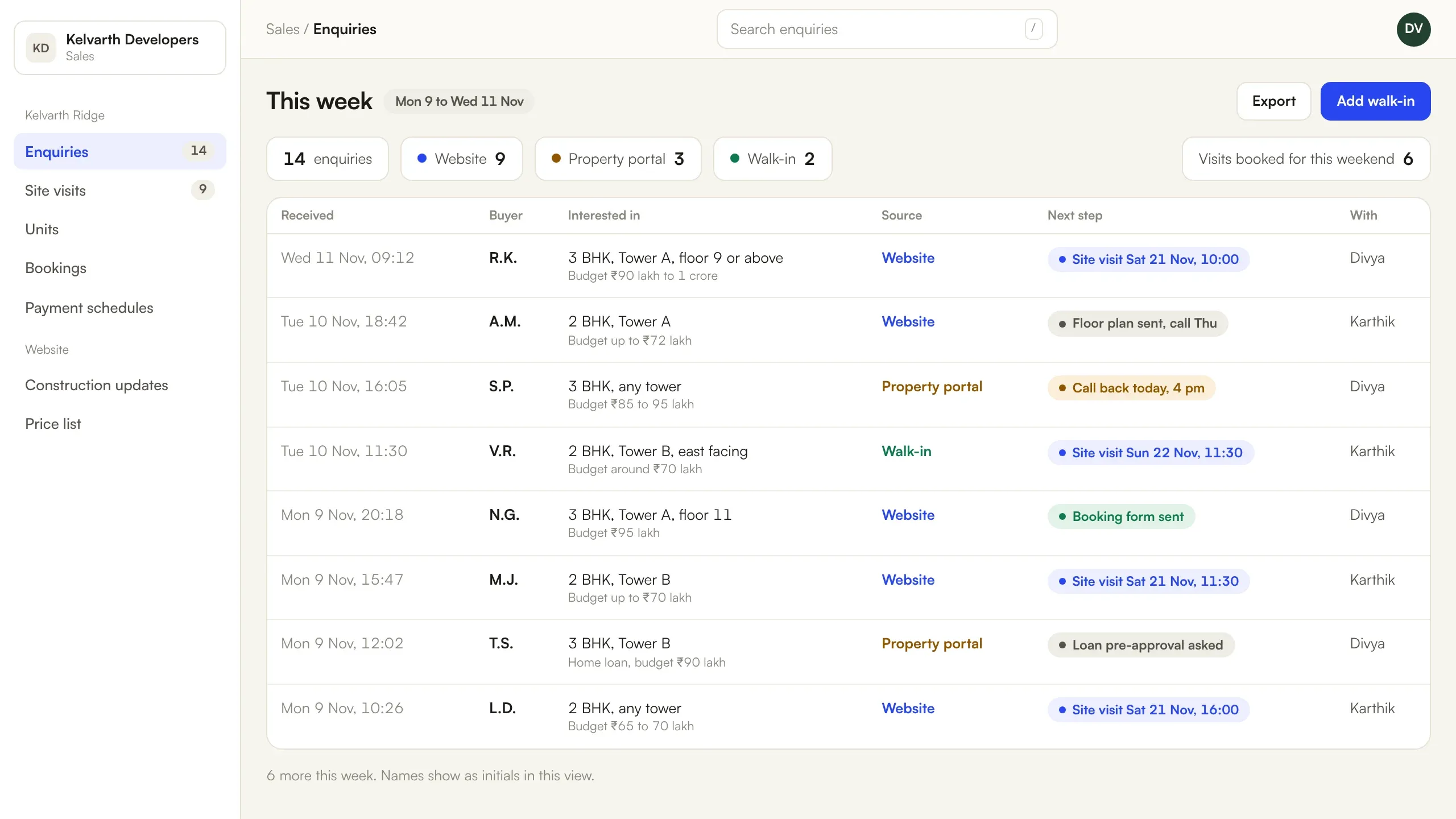
Website forms, property portal leads and walk-ins go into one list, each with the project and home type the buyer asked about and the next step agreed with them. Your sales team works from that list instead of three inboxes and a notebook at the site office.
If you already have a CRM, the site sends to it. If you run sales and bookings in ERPNext, enquiries land in the same system as unit bookings and payment schedules: that is our ERPNext setup for builders, a separate project with its own price.


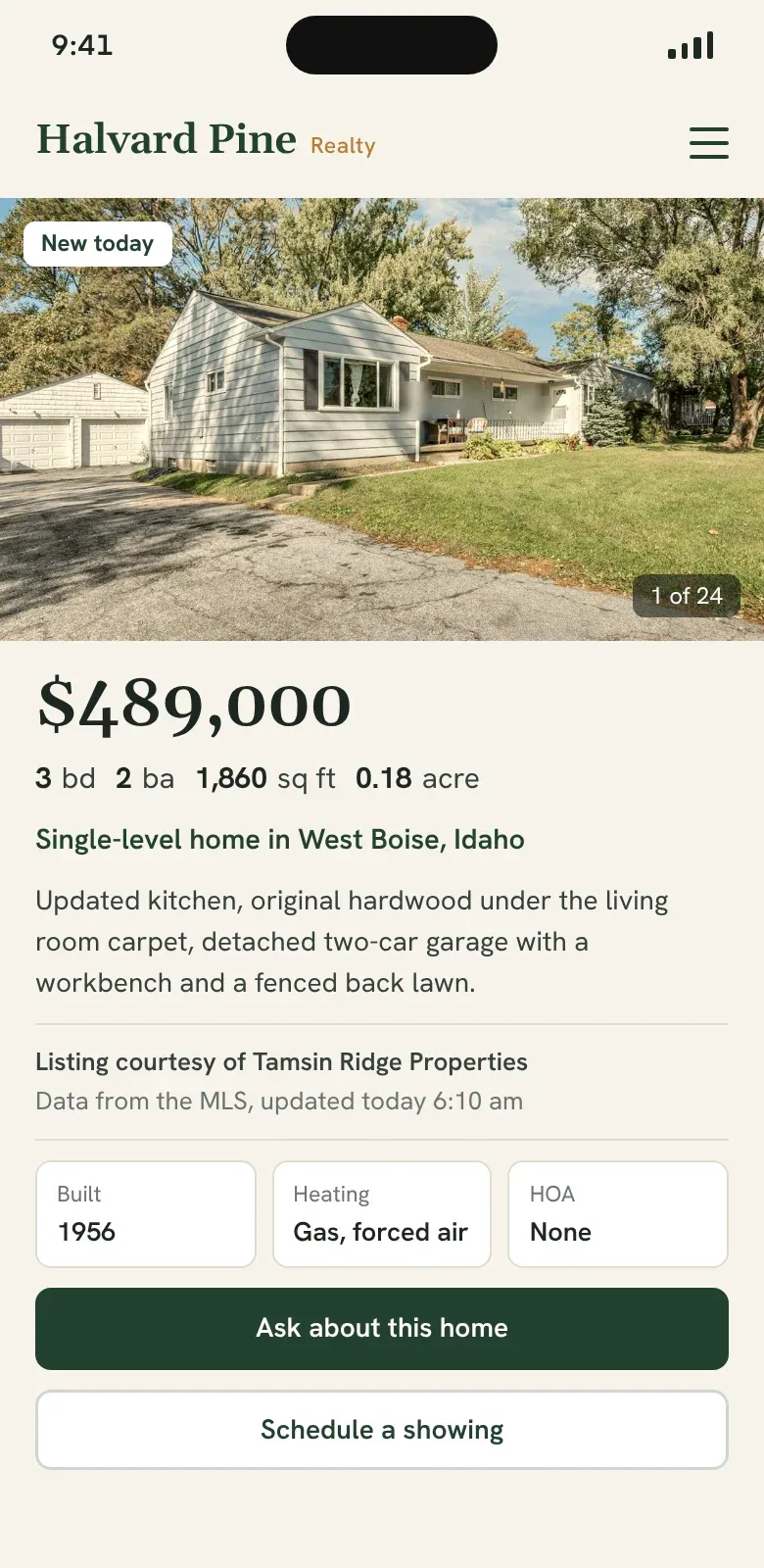
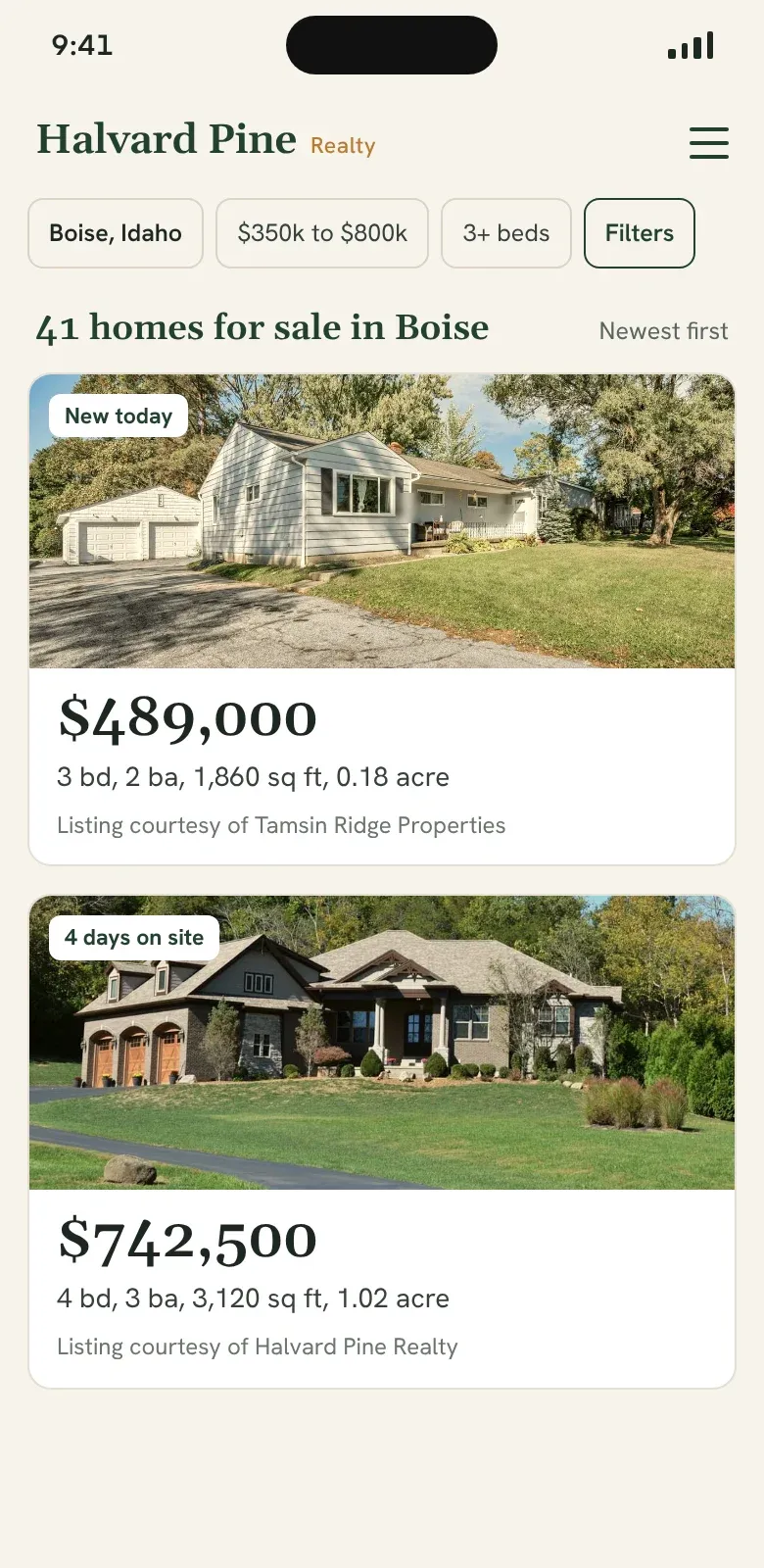
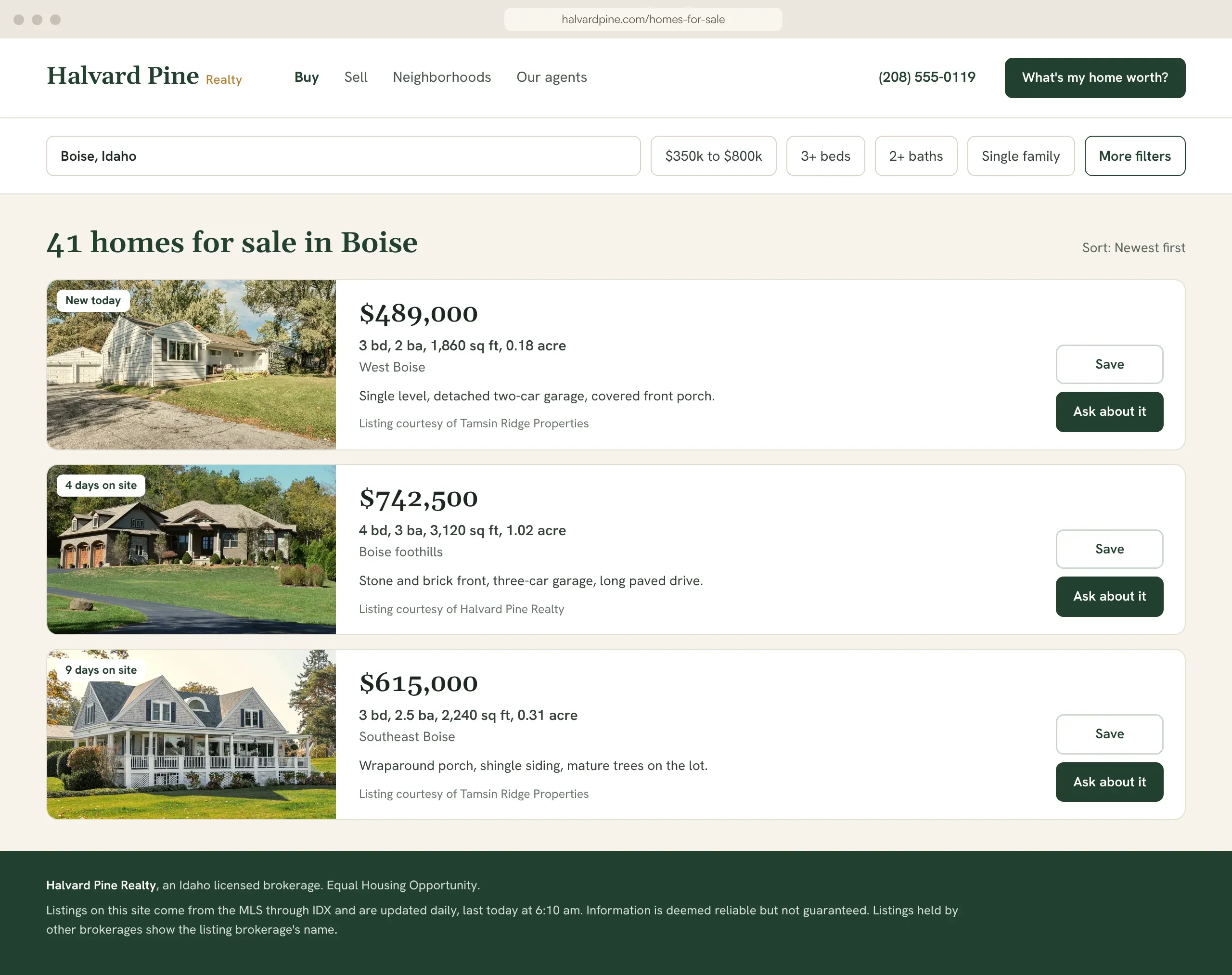
A real estate website with IDX shows listings from your MLS, through an IDX provider or the MLS's RESO Web API. The MLS decides how they're shown; most require the listing brokerage's name on every listing. We build the search and listing pages to those rules and send every enquiry to you.


Part A, at listing
Part B, every property
Part C, where it applies
The fields come from your agency software, so the portal listing and your own site say the same thing.
Kelvarth Developers, Coimbatore
A developer selling its first project in North Coimbatore: two towers, 168 homes. Unit cards show carpet area, the floor grid reads from their sales office, construction updates go up monthly, and weekend visits get booked from the site.


Kelvarth DevelopersWhat would you change?
The construction-update page took longer than the rest, because our site team sends photos on WhatsApp and someone has to choose the good ones. Everything else needed nothing from us after launch: each enquiry reaches us with the unit the buyer looked at, and our Saturday site visits fill from the website first.
Projects in India are priced in rupees, everything else in US dollars, and one call settles the figure. Listing data and portal fees go straight to the companies that charge them.
One project, or one agent, with a site of up to 5 pages
In India from ₹45,000 + GST
Developers with live inventory, or agents with IDX listings
In India from ₹1,10,000 + GST
Several projects, a brokerage with many agents, or a site moving off an old platform
In India ₹2,900 a month + GST
Hosting, tested updates and backups. We check the live site after every change.
A website for real estate starts from $1,400 for a project or agent site (from ₹45,000 + GST in India). With live MLS listings or inventory, enquiry routing and site-visit booking, it starts from $3,600 (from ₹1,10,000 + GST in India). IDX vendor or MLS fees are separate and paid to them.
A site that shows MLS listings through Internet Data Exchange, including homes listed by other brokerages. Your MLS approves the feed and sets the display rules, such as naming the listing brokerage on each listing.
Not by copying them. In the US, your site shows MLS listings through IDX, not the portal's data. In the UK, your agency software sends one record to your site and to the portals, so they match.
The RERA registration number with a link to the state authority, on the site and on every ad, and nothing that markets the project before it is registered. Some states, such as Maharashtra, also want a QR code in their ads.
Usually not. One group site with a page set per project keeps your track record in one place, and each project's pages carry that project's own registration number.
Yes, with the project and home type attached. Builders on ERPNext can have them land in the same system as bookings and payment schedules.
Material information: price, council tax and tenure; property type, construction, utilities and parking; and issues such as flood risk where they apply. We put those fields in the listing template.
We embed the tour your photographer or 3D provider makes; we don't shoot them.
Sources: RERA Act 2016, India Code; AP RERA advertisement guidelines (ss. 3, 11); MahaRERA QR rule (housing.com); NAR IDX policy; RESO Web API; 24 CFR 100.75; RICS on material information; Rightmove datafeed; Dubai Media Office on Madmoun; Google Business Profile guidelines.
Book a call →On the call: what your market requires on the page, which listing feed fits, and a written price.